Polymorphic Malware in the Age of Agentic AI: How Attacks Adapt in Real Time
Learn how polymorphic malware works, how AI malware evolves in real time, and the best detection methods to stop adaptive cyberattacks.

Polymorphic malware is one of the most sophisticated cyber threats because it can continuously modify its code to avoid detection while preserving its malicious purpose. With the rise of agentic AI, these attacks are becoming more adaptive, using real-time decision-making and evasion techniques to bypass traditional security tools. This article examines how polymorphic malware works, why it is difficult to detect, and how modern defenses such as behavior-based analysis and sandbox testing help identify and stop evolving AI-driven threats.
Introduction
A finance employee receives an invoice from what appears to be a regular vendor and downloads the attached file without hesitation. Within minutes, the company’s security tools detect suspicious behavior and quarantine the file. The team believes the threat has been stopped.
The next day, a second invoice arrives from a different email address. It carries the same malware, but the code has been altered enough to avoid the previous detection rules. By the time analysts recognize the pattern, credentials have already been stolen and internal systems are being probed.
This pattern reflects how modern malware evolves to bypass detection. In the age of agentic AI, these attacks are becoming faster, smarter, and far more difficult to stop with traditional defenses.
What Is Polymorphic Malware?
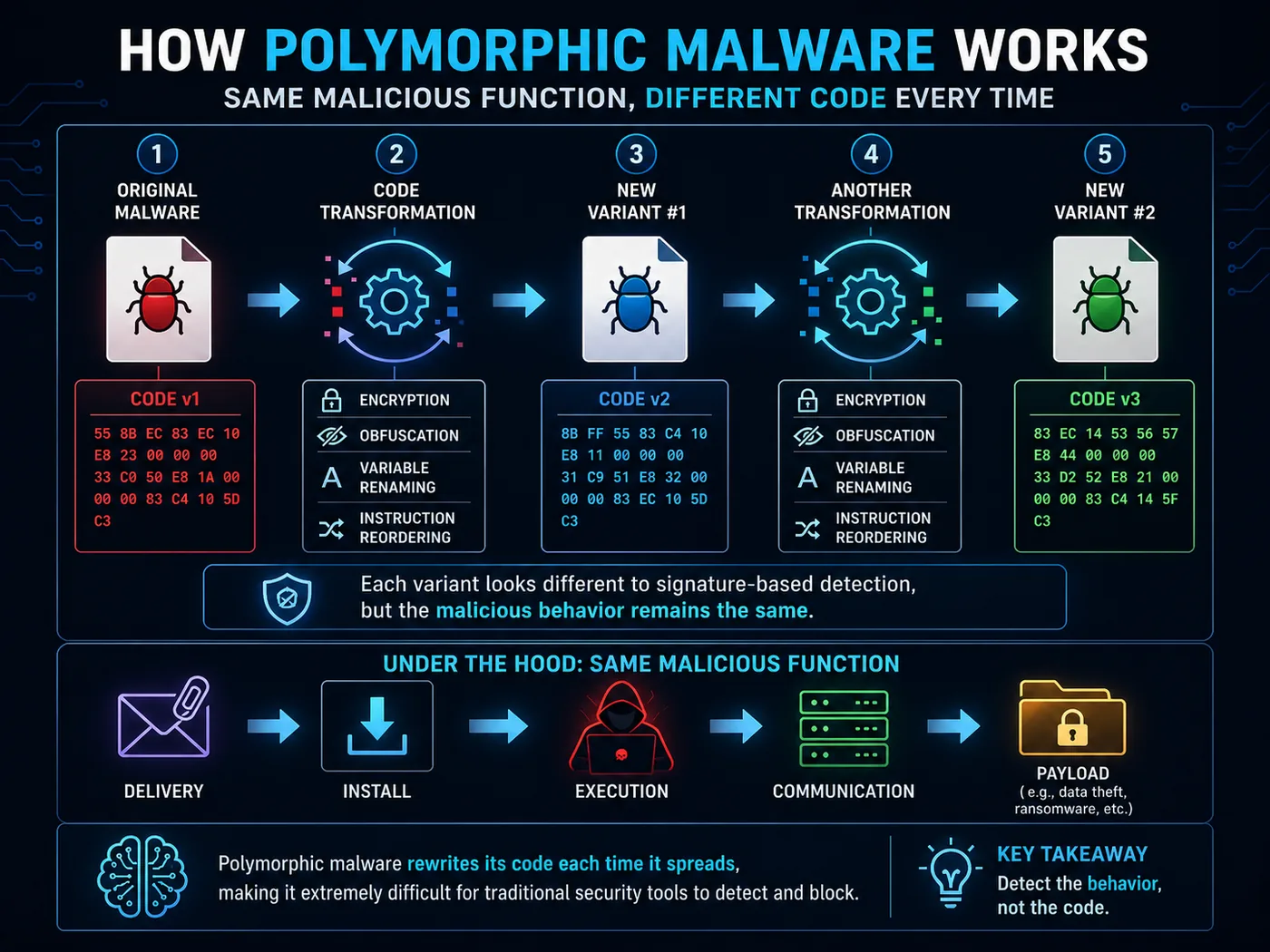
Polymorphic malware is malicious software that modifies its code while preserving its core function, allowing it to evade signature-based detection because each version appears unique even though the behavior remains unchanged.
It uses techniques such as encryption, code obfuscation, variable renaming, and instruction reordering to generate new variants.
Why Polymorphic Malware Is Dangerous
Traditional security tools depend on identifying known patterns. When each variant looks different, detection becomes unreliable.
This leads to repeated infections where the same threat reappears in modified forms, forcing security teams to respond multiple times.
The impact increases when attackers use polymorphic malware to access credentials, move laterally across systems, or deploy ransomware, often remaining undetected until significant damage has occurred. The problem grows as malware becomes more adaptive.
How Agentic AI Is Transforming Malware
Polymorphic malware once relied on pre-programmed rules to change its code. With agentic AI, it can now adjust its behavior dynamically with minimal human input.
Instead of executing the same way everywhere, AI-driven malware can analyze a system, identify defenses, and choose how to avoid detection. It may delay execution, bypass monitored processes, or alter its communication patterns.
This turns malware from a static threat into an adaptive one, making detection and containment significantly more difficult for traditional security tools.
Real-Time Malware Evasion Techniques
Modern polymorphic malware uses several techniques to avoid detection during execution.
Common methods include code obfuscation, sandbox evasion, process injection, and delayed execution. These techniques help malware remain hidden by altering how it appears or behaves at runtime.
With agentic AI, malware can select and adjust these techniques dynamically based on the system it encounters, making detection more difficult.
Real-World Polymorphic Malware Attacks
Polymorphic malware is not just a theoretical threat. Several cyber incidents have shown how it can evade detection and spread rapidly across systems.
One of the best-known examples is Virut, a file-infecting malware strain active since the mid-2000s. It injected malicious code into executable files and was difficult to remove because each infected file carried a modified version of the malware.
Another major case was Storm Worm, which spread through large-scale phishing emails disguised as breaking news alerts. Its payload changed frequently, allowing it to bypass traditional antivirus tools and infect millions of devices.
A more advanced example was Virlock, which combined ransomware behavior with file infection. It locked and encrypted files while also infecting them, so each infected file could spread a freshly mutated copy, making recovery more complex.
More recently, malware families such as Emotet and TrickBot demonstrated how modern campaigns evolve delivery methods, evade defenses, and steal credentials across enterprise environments. Emotet, in particular, has been widely analyzed by cybersecurity agencies, including in a CISA advisory on Emotet.
These cases show how the same threat can persist in different forms, making it difficult to fully eliminate once it enters a system.
Sandbox Malware Analysis and Simulations
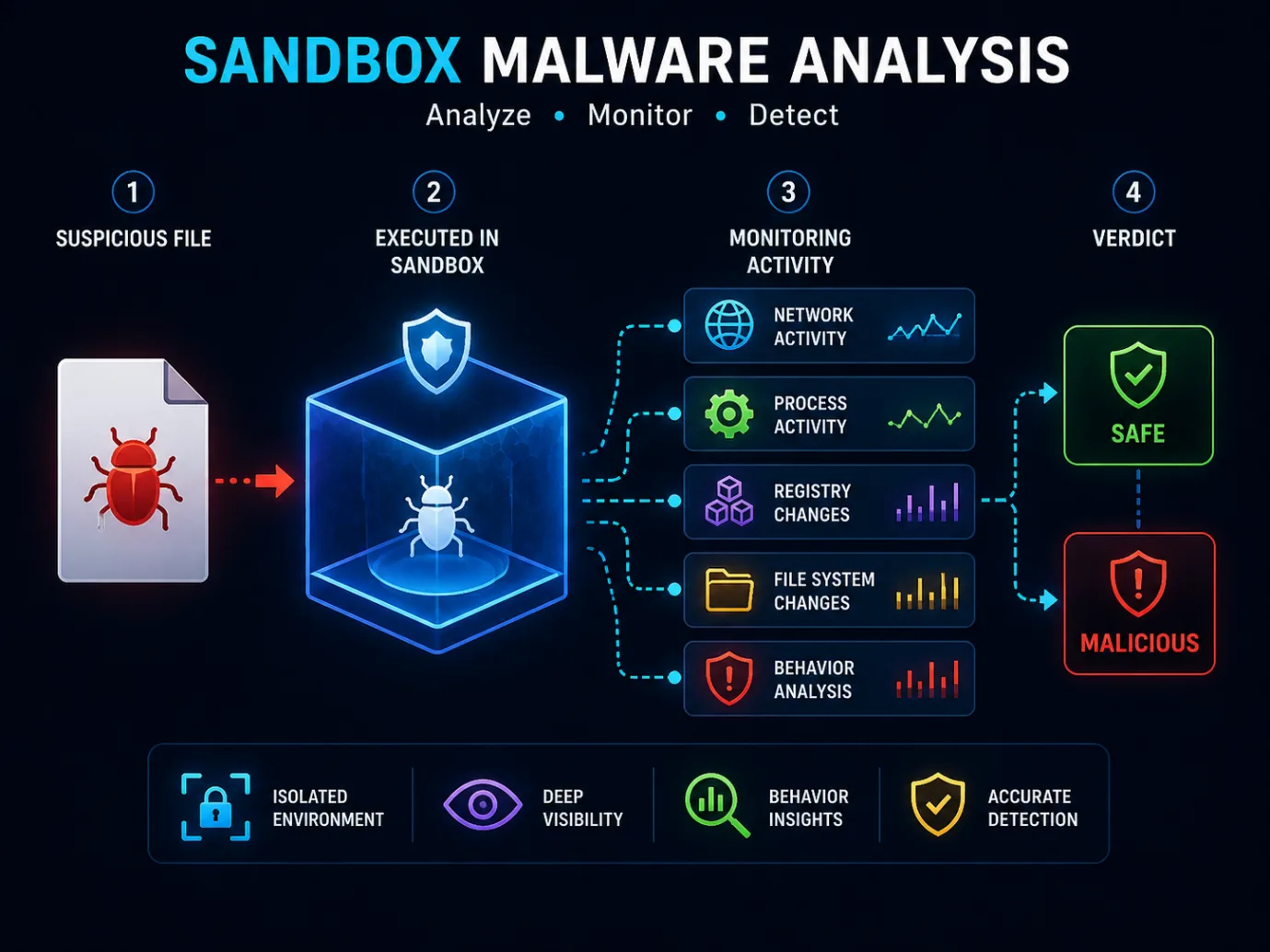
When security teams suspect polymorphic malware, static code inspection is often not enough. Instead, they use sandbox environments to observe how it behaves during execution.
A sandbox is an isolated virtual system where suspicious files can run safely without affecting real networks or devices. Rather than analyzing code structure, analysts focus on runtime activity.
For example, a sample may create hidden processes, contact unknown servers, modify registry settings, or download additional payloads. These actions often reveal malicious intent even when the code appears different.
Organizations use open-source sandboxes such as Cuckoo and its successor CAPE, as well as enterprise threat analysis platforms, to automate this process. This helps security teams detect threats faster, understand how they spread, and strengthen defenses before threats reach production systems.
Detecting Polymorphic Malware Using Python
Because polymorphic malware constantly modifies its code, detection often focuses on behavior rather than static signatures. Simple scripts can help identify patterns that appear during execution.
For example, the Python script below demonstrates a simple behavior-based detection approach by checking for common suspicious actions.
# List of suspicious behaviors commonly seen in malware
suspicious_actions = [
    "creates_hidden_process",
    "modifies_registry",
    "connects_to_unknown_ip",
    "runs_from_temp"
]

def detect_malware(activity_log):
    score = 0

    for action in suspicious_actions:
        if action in activity_log:
            score += 1

    return "Malware Likely" if score >= 2 else "No Immediate Threat"

sample_log = [
    "creates_hidden_process",
    "connects_to_unknown_ip"
]

print(detect_malware(sample_log))
Output:
Malware Likely
This approach works because, even when the code changes, certain actions remain consistent. In practice, enterprise systems extend this by combining behavioral signals with machine learning, endpoint telemetry, and network analysis.
Behavior-Based Detection Strategies
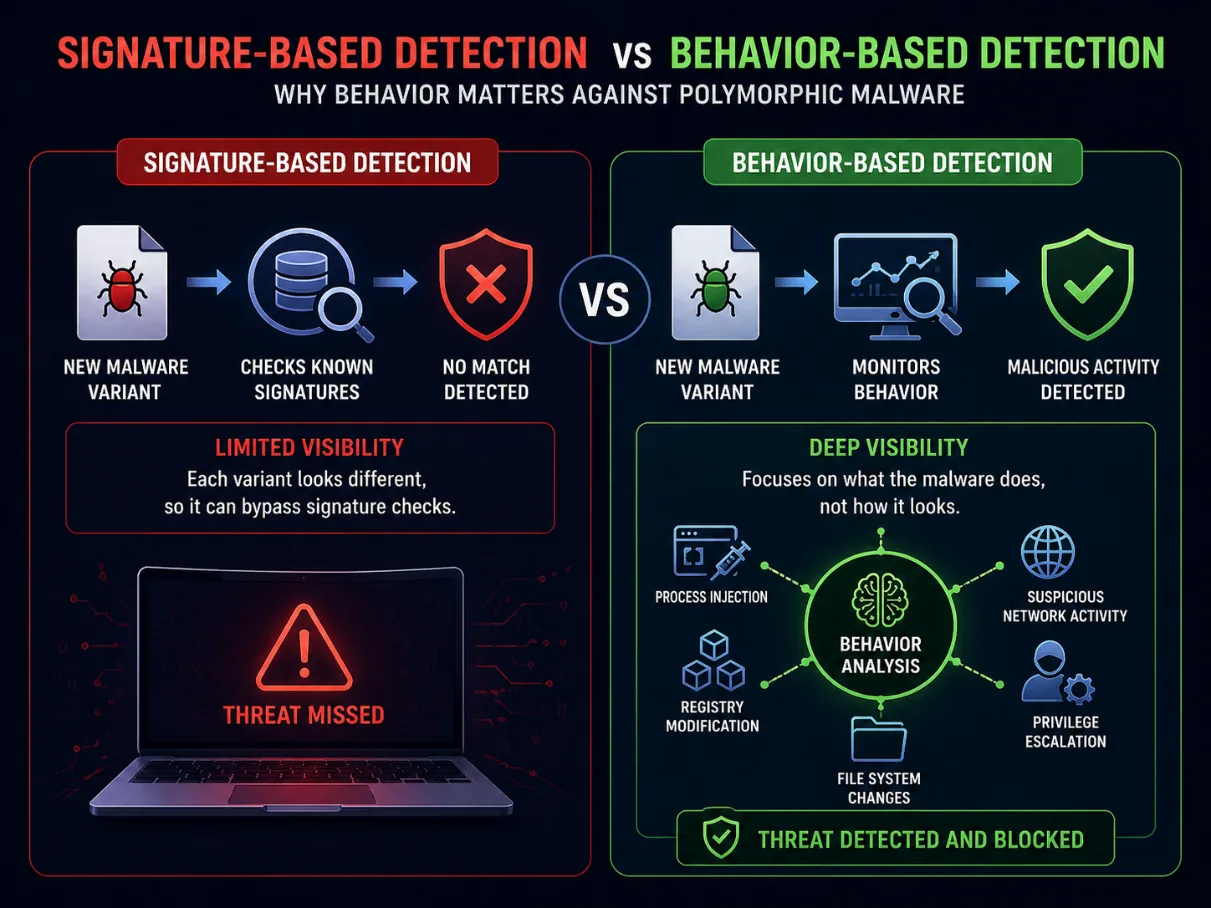
Traditional antivirus tools rely on known signatures, which polymorphic malware can bypass. To address this, modern security systems focus on behavior-based detection, analyzing actions instead of file structure.
Rather than checking for known patterns, these systems monitor how processes behave during execution. Alerts may be triggered when a program attempts to disable security controls, access credentials, inject code into another process, or repeatedly connect to suspicious external servers.
Platforms such as Microsoft Defender for Endpoint and CrowdStrike Falcon use behavioral telemetry to identify threats that static analysis may miss.
Because this approach focuses on activity rather than code, it remains effective even when malware continuously changes its structure.
Practical Defense Measures for Modern Threats
Defending against polymorphic malware requires more than traditional antivirus. Organizations need a layered approach that covers prevention, detection, and response.
Keeping systems, browsers, and applications updated is critical, as many attacks exploit known vulnerabilities in outdated software.
Endpoint protection and EDR solutions such as SentinelOne or Microsoft Defender for Endpoint help detect suspicious activity early and isolate affected devices.
User awareness is equally important. Employees should be trained to recognize phishing attempts, suspicious downloads, and unexpected attachments, since many attacks begin with social engineering.
Organizations should also maintain secure backups, segment critical systems, and have an incident response plan in place. These measures help contain damage if a threat bypasses initial defenses.
Key Takeaways
- Polymorphic malware changes its code with every variant while keeping the same malicious behavior, which defeats signature-based detection.
- Agentic AI makes malware adaptive, letting it analyze a system and choose how to evade defenses in real time.
- Real-world families such as Virut, Storm Worm, Virlock, Emotet, and TrickBot show how mutating threats persist and spread.
- Sandbox analysis and behavior-based detection catch what static inspection misses by focusing on what code does, not how it looks.
- Layered defenses, including patching, EDR, user awareness, backups, segmentation, and incident response, limit the damage when a variant gets through.
What’s Next: Zero-Day Exploits
Polymorphic malware is only one part of the modern threat landscape. The next major challenge is zero-day exploits, where attackers target vulnerabilities before vendors release a patch or even become aware of them.
When combined with adaptive malware, these attacks can be especially difficult to detect and contain. Attackers gain access through unknown weaknesses and operate before defenses are in place.
In the next article, we explore how zero-day exploits work, why they are valuable to attackers, and how organizations can reduce risk through patch management, threat intelligence, and proactive monitoring.
Frequently Asked Questions
1. What is polymorphic malware?
Polymorphic malware is a type of malicious software that modifies its code each time it replicates while preserving its core functionality. This makes each variant appear different to signature-based security tools, even though the underlying behavior remains the same.
2. Why is polymorphic malware dangerous?
It is difficult to detect consistently because every variant looks unique. This allows attackers to reuse the same malware across multiple attempts, increasing the chances of bypassing defenses and remaining undetected for longer periods.
3. How does agentic AI improve malware attacks?
Agentic AI enables malware to analyze its environment and adjust how it operates. It can choose when to execute, what actions to take, and how to avoid detection, making attacks more adaptive and less dependent on manual updates.
4. How can organizations detect polymorphic malware?
Detection relies on monitoring behavior rather than code. Techniques include sandbox analysis, endpoint detection and response (EDR), and identifying patterns such as unusual network activity, process injection, or unauthorized system changes.
5. What are examples of polymorphic malware?
Examples include Virut, Storm Worm, Virlock, Emotet, and TrickBot. These malware families used code mutation and adaptive techniques to evade detection and spread across systems.
6. Can traditional antivirus stop polymorphic malware?
Traditional antivirus can detect known variants, but it often struggles with new ones because the code keeps changing. Modern defenses use behavior-based detection to identify threats more reliably.
7. How can businesses reduce the risk of malware attacks?
Businesses can reduce risk by keeping systems updated, using endpoint protection tools, training employees to recognize threats, maintaining backups, and implementing network segmentation and incident response plans.